Snowflake Summit 2024: Changes & Trends in the Data Cloud Community

The past year has been transformative for the Snowflake community. That was our key takeaway from Snowflake Summit 2024.
Like previous years, the Summit delivered strong presentations and conversations. It was great to meet Keebo customers in person.
Our team has been reviewing key takeaways from the Summit. We could share many more takeaways, but this post highlights the most important changes.
Instead, let’s focus on the most encouraging changes from last year’s Summit and what they mean for the future of the Snowflake community and ecosystem.
1. Snowflake Customers Have Become More Technical
Last year, conversations with Snowflake customers typically started with pleasantries and high-level use cases before eventually getting into technical details.
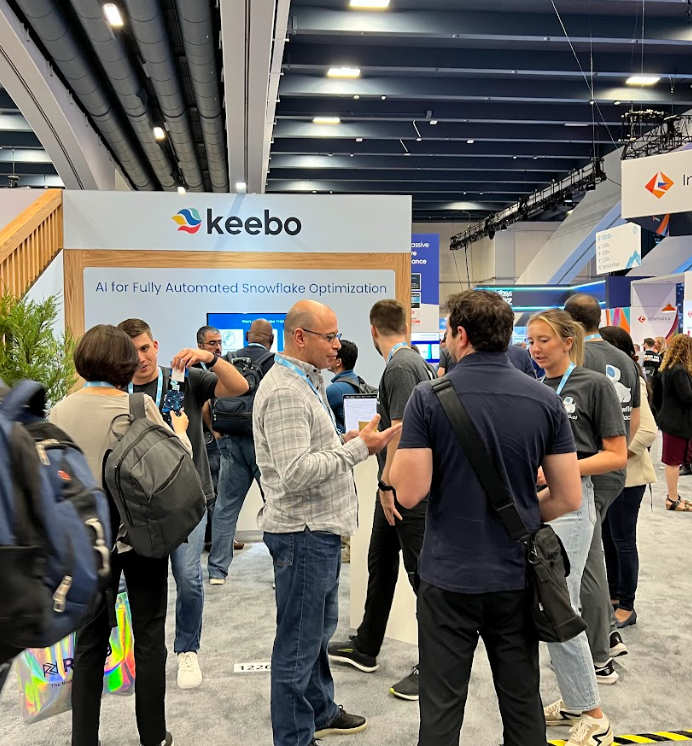
Not this year. In fact, the opposite was true: nearly every conversation immediately went technical. Across roles—decision-makers, sales, engineers, analysts, and CFOs—everyone wanted to get into the weeds quickly.
This should come as no surprise to those familiar with Snowflake. It’s the natural result of Snowflake’s mission: lower barriers to the data cloud, drive adoption among non-technical users, and expand its user base.
As data access expands, buyers become more technical to better use cloud data warehouses like Snowflake. What’s more, the challenges and priorities facing businesses (see #3 below) incentivize more intimate knowledge of these platforms and capabilities.
Overall, this is a net benefit for the data cloud ecosystem. The more users understand Snowflake’s capabilities, the better they can optimize costs and maximize value for everyone.
2. There’s AI and There’s AI
Spend five minutes in the exhibit hall and you’ll see AI everywhere—miss it only if you walk with your eyes closed.
Everyone featured “AI” in their messaging—developers, security firms, and consultants alike. It’s a sign of the times—everyone has to talk about AI to be relevant.
On the one hand, this is encouraging, as it shows a broad recognition of AI’s true potential and value. We’re moving past last year’s fear that AI would replace jobs.
Now, data teams are quickly realizing that AI actually automates tasks that humans aren’t able to do. At Keebo, no one wakes up at 3 a.m. to change warehouse settings for five minutes, then go back to sleep. But that’s exactly what AI is doing.
Data teams are realizing it doesn’t threaten their jobs. Rather, it augments & compliments their own manual efforts. As a result, people are more open to AI and its capabilities.
On the other hand, there’s a negative aspect to all this. Since AI has become a bit of a buzzword, there’s a lot of noise out there. It’s harder to tell which solutions deliver real results with AI and which just chase attention.
The good news: as Snowflake customers become more technical (see #1 above), this problem will soon sort itself out.
3. Cost & Security Are Top of Mind
Without a doubt, the top priorities among almost every Snowflake customer we talked to—decision makers, engineers, data scientists, analysts, etc.—were cost and security.
Given the state of the economy overall, this shouldn’t be surprising. We’ve all seen the damage to public reputation that security breaches can cause—not to mention an average $4.45 million cost per breach.
And as markets tighten, companies have to adapt and do more with less, cost efficiency and a sharper look at ROI become top priorities. Snowflake users, in particular, can often fall prey to ballooning cloud costs and over-provisioning, prompting questions into whether they’re leveraging those compute resources as optimally and wisely as possible.
The focus on cost optimization may be the biggest change from last year’s Summit, where many attendees were hesitant to adopt automated cost optimization measures. Instead, they wanted to rely on insights and advice, and make the actual adjustments to Snowflake manually. What’s more, there was a stronger tendency to want to build optimization solutions internally rather than adopt a third-party solution.
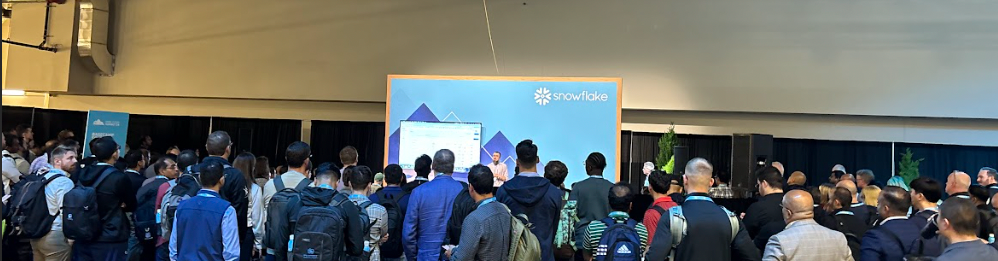
Now, these same Snowflake users are quickly realizing that there are better places to deploy engineering resources than rote optimizations, and a greater interest in automated, AI-powered solutions. Just as anecdotal evidence, there were several sessions on Snowflake cost reduction, and all of them were packed with standing room only.
Final Thoughts on Snowflake Summit 2024
Of course, there are plenty more takeaways from Snowflake Summit 2024, but these are the biggest contrasts from last year’s event. Taken together, they signal a huge turning point in the broader Snowflake community—now that most enterprises are in the cloud, the next question is how to leverage it most efficiently.
That’s where Keebo can help. Our real-time, AI-powered optimizations have drastically reduced our customers’ Snowflake costs—saving many customers 25% and more.